
Unlabeled Wisdom
Why We Should Trust Instinct and Tradition Over Nutrition
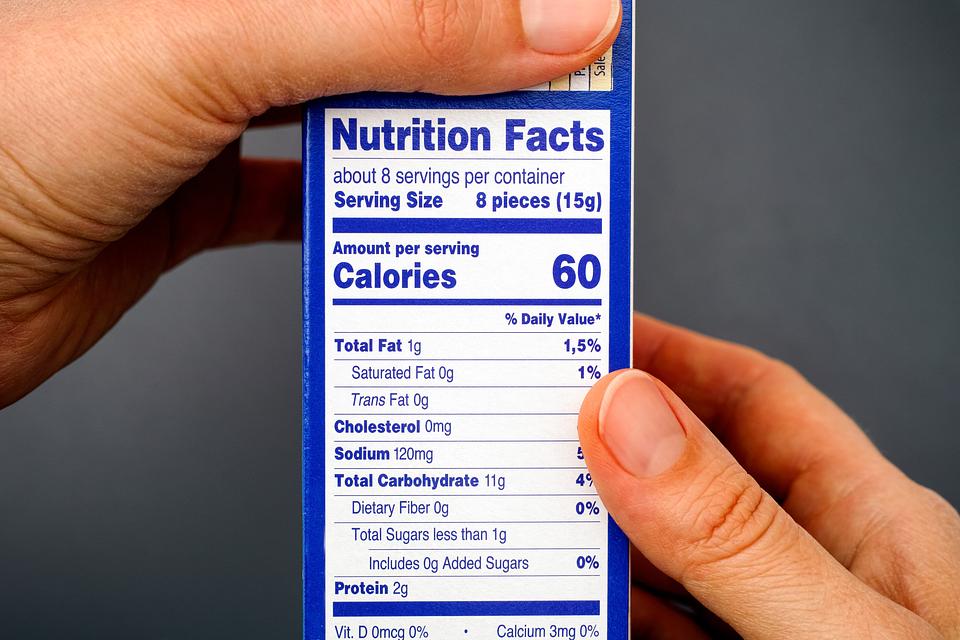
Michael Pollan’s The Omnivore’s Dilemma opens with a deceptively simple question: what should we eat? Pollan calls it “the omnivore’s dilemma”: because humans can eat almost anything, deciding what we should eat becomes complicated. A cow doesn’t wrestle with this. It eats grass and thrives. (Although many cows today don’t eat grass—which is a whole other problem I unpacked in my earlier essay, How America Broke Food.) But we, faced with a vast buffet of modern options, end up anxious, confused and sick.
It’s nature’s original paradox of choice.
An implicit but powerful theme running through Pollan’s book is this: we are profoundly ignorant when it comes to nutrition. Despite all our charts, guidelines, and scientific studies, we don’t actually know what we’re talking about. And history proves it.
A Brief History of Getting It Wrong
Nutritional science, like many sciences, began with the basics. We discovered macronutrients—proteins, fats, and carbohydrates—and believed we had cracked the code of human nourishment. But then sailors began dying of scurvy despite getting all their macros. Something was missing. Enter micronutrients: vitamins and minerals. Suddenly, Vitamin C was the hero we didn’t know we needed.
But the story doesn’t stop there. These days, we’re exploring “micro-micro nutrients” like antioxidants and polyphenols. There’s also an entirely new dimension in the realm of probiotics and gut bacteria—living organisms that seem to play an outsized role in our digestion, immunity, and even mental health. (I explored that more in my essay on raw milk.)
This pattern should give any thinking person pause: every generation thinks it has the answers. Every generation has been wrong. Our ignorance seems to scale infinitely downward—each “breakthrough” only revealing new layers of blindness.
And if it were only a problem of missing parts, we might eventually figure it out. But our understanding is also limited in the opposite direction: how nutrients function in relationship to one another.
Science excels at reductionism—breaking things down into smaller and smaller parts. That’s how we got from nutrients to molecules to atoms to quarks. But it struggles with holistic, emergent properties—the kinds of truths that arise from the relationship between parts, not the parts themselves.
Take fatty acids as a case study. Recent research emphasizes the benefits of omega-3s, but even more important than their absolute quantity is the ratio of omega-3s to omega-6s. For much of human history, this ratio was around 1:1. In the modern Western diet, it can balloon to 10:1 or higher. That imbalance—an emergent quality of the whole diet—has measurable consequences for inflammation and disease. This isn’t a flaw in the parts. It’s a flaw in the whole pattern.
So we’re ignorant in both directions: downward (missing pieces) and upward (missing relationships). Nutritional science has blind spots at every level.
Hear me out: the point of this essay isn’t that polyphenols or omega-3s are the missing piece of your nutrition. It’s that they’re likely just a couple of missing pieces in an ocean of missing pieces.
If Not Science, Then What?
Given this humbling view of nutritional science, the question becomes urgent: if we can’t fully trust science to tell us what to eat, what can we trust?
Instinct—In the Right Context
One possibility is instinct. The natural world is full of clues that flavor and nutrition are often linked. Take flavonoids, a type of polyphenol—plant compounds that contribute both to health and to taste. The fact that something tastes good often really does signal that it’s good for us.
We’re designed to eat what tastes good and to drink when we’re thirsty. (A request for my generation: lets stop with this “drink X cups of water a day” stuff and start listening to our bodies. Here's my humble suggestion: drink when you’re thirsty.)
This is a distinctly un-American perspective. We’ve been raised to believe that if something tastes bad, it must be good for us (“Eat your broccoli!”), and if it tastes good, it must be bad. That flies in the face of evolutionary logic. And yet—it’s kind of true today. A Twinkie and a Coke are pretty tasty... and obviously not good for you. So what happened?
Modern food broke the link.
Industrial food engineers have hijacked our taste buds by designing hyper-palatable products that trick our instincts. Sweetness, once a rare signal of fruit or honey, is now available in unlimited quantities. And it’s not just sugar. As Pollan points out, three once-rare ingredients—fat, salt, and sugar—are now mass-produced and combined in unnatural ways by the food industry. The result is a sensory illusion, a flavor high that doesn’t match nutritional reality.
So yes—we should trust our instincts. But only in the right context. When we eat real, unprocessed food, instinct is a wise guide. It tells us when to drink water. It tells us when to stop eating. It even tells us what flavors we might be craving for reasons we don’t consciously understand.
But in a processed food environment? Instinct leads us astray. Like a moth to a flame.
Tradition—The Longest Human Experiment
That’s why tradition matters. If instinct only works within certain boundaries, then tradition defines those boundaries. Cultures around the world developed dietary patterns not by reading studies, but by surviving.
The work of Sally Fallon and the Weston A. Price Foundation has helped surface this ancestral wisdom. Price’s early 20th-century research into traditional societies showed that people eating their native diets—rich in organ meats, fermented foods, and whole fats—had robust health and nearly perfect teeth, often without ever brushing their teeth.
Tradition doesn’t need a nutrition label. It worked before we knew what vitamins were. It worked before we discovered flavonoids.
If instinct is our guide, what that looks like will naturally vary from person to person. But this isn’t rocket science. Personally, when it comes to unprocessed, whole foods, I gravitate toward fruit, meat, dairy, and eggs as the staples of my diet. Of course, the details matter. Despite what the USDA promotes as standard, not all meat—or fruit, or vegetables—is created equal. This is where tradition and instinct become powerful tools.
Take meat, for example. Historically, humans hunted their food. Even without analyzing nutritional charts, it’s reasonable to suspect that wild game is among the most nutrient-dense options available. For many of us, hunting isn’t practical—but we can still look for meat that mirrors the conditions of the wild. Domesticated animals raised in ways that honor their natural instincts—like cattle grazing on grass—are a clear next best. It’s no surprise that grass-fed beef, like wild venison, contains significantly more omega-3 fatty acids than its corn-fed counterpart. Eating this way brings us closer to the ancestral 1:1 ratio of omega-6 to omega-3 fats.
An even simpler example is fruit. Our homegrown strawberries taste five times better than anything from the grocery store. The same goes for most of our garden’s produce. I don’t need a lab report to tell me these berries are richer in micronutrients and antioxidants. My senses already know.
The deeper insight here is this: you don’t need to be a nutritionist to reach this conclusion. If you follow instinct and tradition, you often arrive ahead of the science anyway.
Conclusion: A Diet of Nutritional Humility
Every generation thinks it has arrived. That the science is finally settled. That the new pyramid, or plate, or pill is the answer. But if the history of nutrition has taught us anything, it’s that we’re still stumbling in the dark.
That’s not to say science has no role. It has helped us avoid deficiency diseases and understand some of the mechanisms behind food and health. But it shouldn’t be our compass.
For that, we need something older and wiser.
We need instinct as our compass, within a boundary of tradition.
We need humility—enough to say “we don’t know”.
Because the answer to the omnivore’s dilemma won’t be found in a lab. It’s buried in our cultural memories, our soils, our kitchens, and yes—our taste buds.