
How America Broke Food
Ripping nature apart... and putting it back together
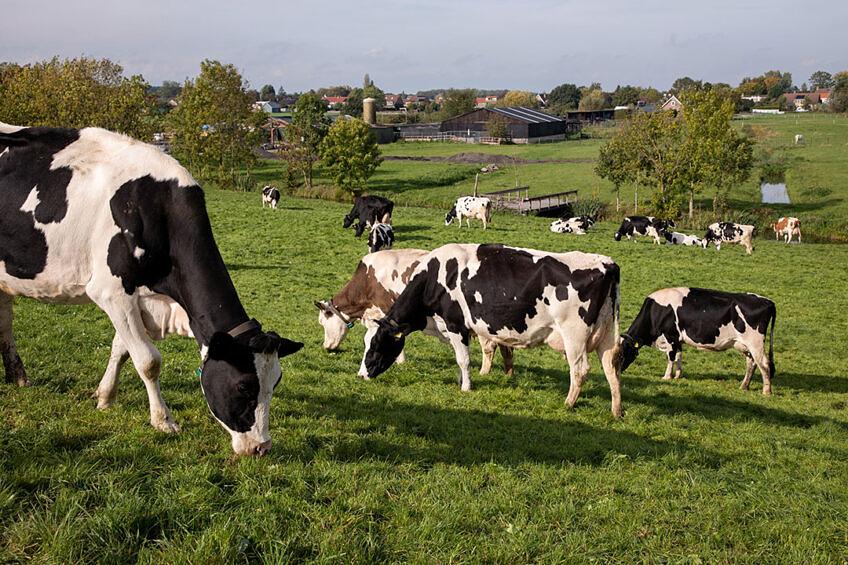
The way we farm is broken. One of the chief reasons is that we intentionally broke it apart. Why would we do that? To answer that question, we need to talk about corn and cows. I chose these two agricultural enterprises because they are connected in ways that aren’t obvious on the surface. I believe they are representative of one of the core issues in our agriculture: that we have ripped nature apart in search of economic efficiency, and that is having consequences. Let’s start with corn.
The problem with corn (and annual vegetables and grains in general) is that the way we grow it requires mechanized tillage. The problem with mechanized tillage is that it breaks up the soil and leaves it completely exposed and completely vulnerable to erosion for most of the year.
We lose about a pound of soil for every bushel of corn that is produced[1].
The story of top soil in the US is simple as it is stark. Top soil accumulates naturally at a rate of 1/10 of millimeter per year on average. Our agricultural practices deplete top soil at rate of 1/2 a millimeter per year[2]. 5x its replacement rate. If you spend 5x more than you earn, what happens to your bank account?
Top soil is more than just dirt. It is the life blood of our fertility. To harken back to a previous essay on composting:
“Soil fertility is by far the most stable and important aspect of your homestead’s fertility. You can have a great yield of crop for a year, even 10 years, but if it comes at the cost of your soil fertility you are literally destroying the life of your property.”
The top soil of the Great Plains was once 15 inches deep and now its lucky to be half of that in most agricultural areas.
Our real fertility is washing away into the ocean every year. We are subsidizing that loss of fertility with cheap oil dependent industrial fertilizer - which comes at the cost of food’s nutrition today and comes at the cost of any food at all tomorrow.
A Tangent on Markets and Governments
I couldn’t resist an opportunity for an economics tangent.
Have you ever wondered why corn or corn by-products is in almost every processed food item in the grocery store? Answer: Corn is cheap, so if a company can find a way to produce their product with corn, they can save costs. Simple right? Let’s dig deeper.
Corn is cheap for two important reasons. The first is that the cost to produce corn is externalized. I am referring to negative externalities: where the cost to produce a good is spilled over to a third party. The most common instance of externalized costs is the tragedy of the commons, in which the 3rd party who bears the spill-over cost is all of us. This is precisely what soil erosion from the production of corn is - a cost that industrial ag does not pick up the tab for. We do.
The tragedy of the commons as a concept cannot be overlooked. Any cost that can be externalized, will be. Unless a governing (or moral) body steps and either makes it illegal or frowned upon to do so. Or repairs the market failure by imposing a tax to correct the true cost. This is the logic behind both cigarette taxes and carbon taxes.
The tragedy of the commons is why I am not a “true believer” in the free market - gasp! If you suffer from the delusion that the market is never wrong, as I once did, consider reading this.
Now before you label me a socialist, lets consider the other reason corn is so cheap. Federal subsidies. Federal subsidies put in place by President Nixon. And specifically, his Secretary of Agriculture, a hoosier by the name of Earl Butz. Don’t forget about Earl. More on him later.
Recall that one way to repair the market failure of a tragedy of the commons is to tax the externalized cost. And yet our federal government is subsidizing corn production. A subsidy is the exact opposite of a tax. Literally a negative tax. This friends, is why I’m not a “true believer” in the (federal) government either.
If you are trying to figure out what box to put me in right now, put me in the Localist box. As Nassim Taleb said, “I am Libertarian at the federal level and Socialist at the town and family level.” Yes, you can do that. Sadly, scale is completely absent from our political conversations.
Enough talk of econ and politics.
That’s our predicament with corn and soil. What about cows?
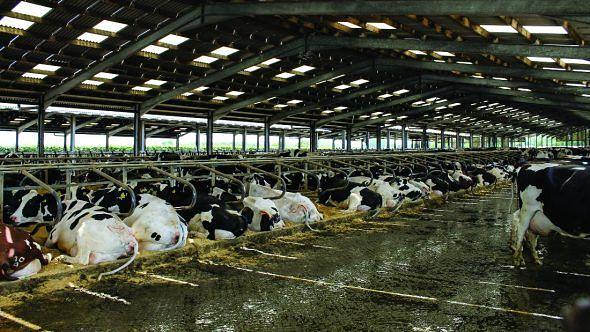
99% of farmed animals in the U.S. are raised in Confined Animal Feeding Operations (CAFOs)[3], where animals live in overcrowded, unsanitary and unnatural conditions.
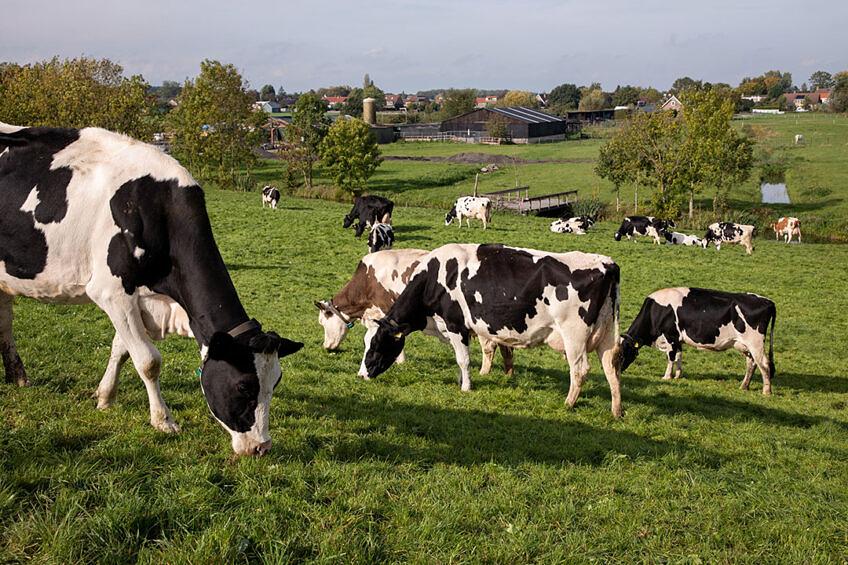
Cows in CAFOs are fed a corn-based diet. This goes against their natural diets. Cows are ruminants. That means they are made to eat grass. The corn they are fed in CAFOs is damaging to their gastrointestinal system, making them completely dependent on antibiotics.
Further complicating this system, a single cow in a factory farm produces over 120 pounds of manure per day, creating significant waste. How did we get here?
The cutlural industrial mindset that created so much “wealth” did so by endlessly splitting enterprises apart for the sake of Adam Smith’s beloved division of labor. This works rather well within the domain of the mechanical. Henry Ford’s assembly line is a marvel of human efficiency. However, this division of enterprise is especially destructive in the context of the biological as compared to the mechanical. And farming deals with the biological.
You can’t pull God’s creation apart without consequences. What you end up with is our current industrial ag system. Corn grown on thousand-acre-monocultures. Depleting literal tons of soil every year. Requiring more and more toxic pesticides and herbicides. Shipped on diesel trucks to CAFOs full of synthetic antibiotic-dependent cows. Who are pooping hundreds of pounds of manure toxic to their own respiratory systems. Necessitating even more synthetic antibiotics. Like I said, the way we farm is broken, both figuratively and literally.
To make matters even worse, cows have an extremely inefficient Feed Conversion Ratio. This is a measure of livestock production efficiencies. It is found by dividing the weight given to an animal in feed divided by its weight gained. For cows its somewhere between 4.5 and 7.5. Meaning, even at best, you can expect to need to feed a cow 5 pounds of feed to gain 1 pound of weight gain.
Vegans and other folks in the anti-cow crowd use this fact to attack cow production, claiming its extremely wasteful. In response, I ask which system are they are referring to? Indeed a corn-fed cow on a CAFO is essentially pooping out more than 80% of the corn its being fed as waste. But on pasture this is an entirely different story.
On pasture, a cow’s inefficient FCR is actually the key to regenerating our eroding soils.
No doubt pasture-raised cows are still pooping out over 80% of the grass they are consuming. But on pasture (the original design), that’s a wonderful thing! Let me explain: Cow manure is the process of returning the land’s fertility back to itself in a more bio-available form.
Think about grass like a machine for turning sunlight and water into green material. Then, think about a cow like a machine for turning that green material into two very important things. Assuming an FCR of 5 the breakdown would be:
20% of that grass goes to meat for human consumption
80% is returned to the soil in a more bioavailable form that actually improves the fertility and top soil of the next cycle. Cow manure is food for microbes in the soil.
To use the bank account metaphor again, cows on pasture is like a bank account growing at a rate of 30% (sunlight + cow manure) in which you are only taking out 20% (the meat) a year. What’s the net effect? 10% growth year over year. If a cow had a higher FCR, it would cease to be regenerative because you’d be taking out more fertility than you are returning.
Regenerative farming isn’t just a fancy buzzword. Although it can be manipulated as such. A true regenerative farm builds top soil every year. This is in stark contrast to most monoculture corn farms you see out your window.
Through the process of increasing the organic matter of the soil we can actually reverse the effects of erosion even further. Erosion happens primarily in large rain events, when the carrying capacity of the land cannot hold any more water. The soil begins to runoff and likely finds itself in a stream, and then in the ocean or one of those murky midwestern lakes. By increasing the organic matter of an acre of soil by just 1%, you increase its capacity to hold water by 20,000 gallons. Think of it like a sponge.
Don’t believe me? Please please watch this video comparing soil runoff in a rain storm between White Oak Pastures, a regenerative cow farm in Georgia, with their monoculture corn growing neighbors. I assure you, the difference is mind-blowing.
How do you think 15 inches of top soil was built in the Great Plains? Pastures of grass and large ruminants (such as the great wooly mammoth) engaging in a beautiful symbiotic relationship with one another. It‘s all part of God’s perfect design and we’ve ripped it apart in our pride.
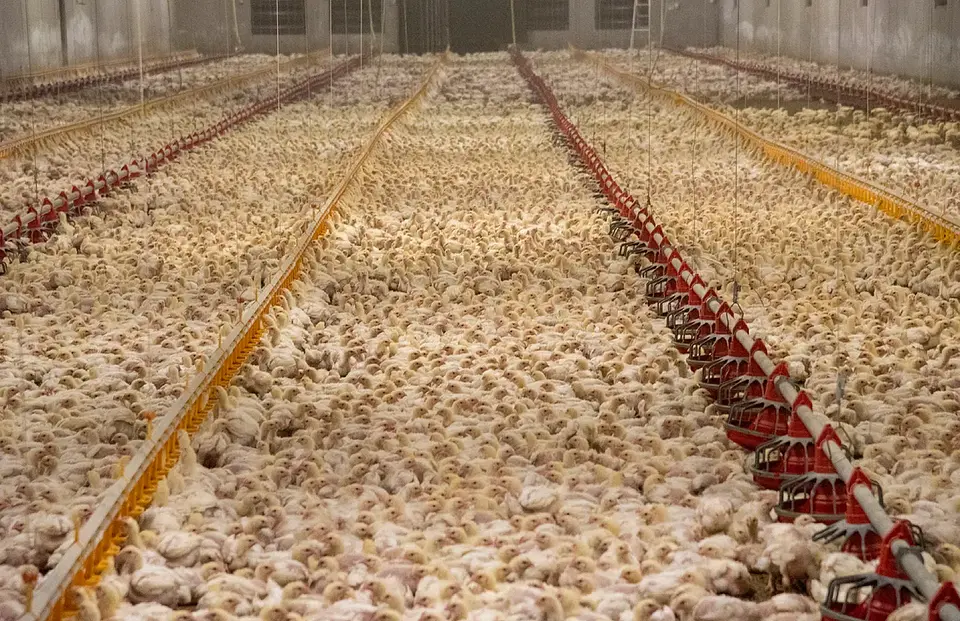
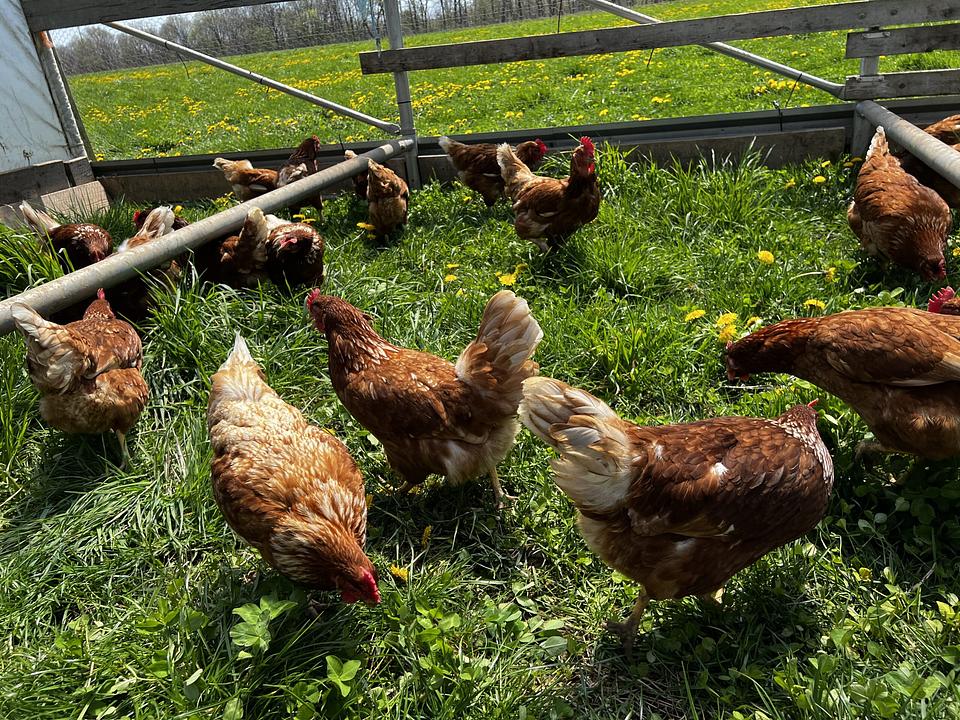
Unfortunately, the ugliness doesn’t end with cows. Industry guidelines require caged chickens to have at least 61 square inches of space. That’s the size of a piece of paper.
This impacts more than just the health of the land and animals.
“You are what you eat eats”
Does this effect us? Well, according to Michael Pollan, famed author of bestsellers The Omnivore’s Dilema and In Defense of Food, “you are what you eat eats”.
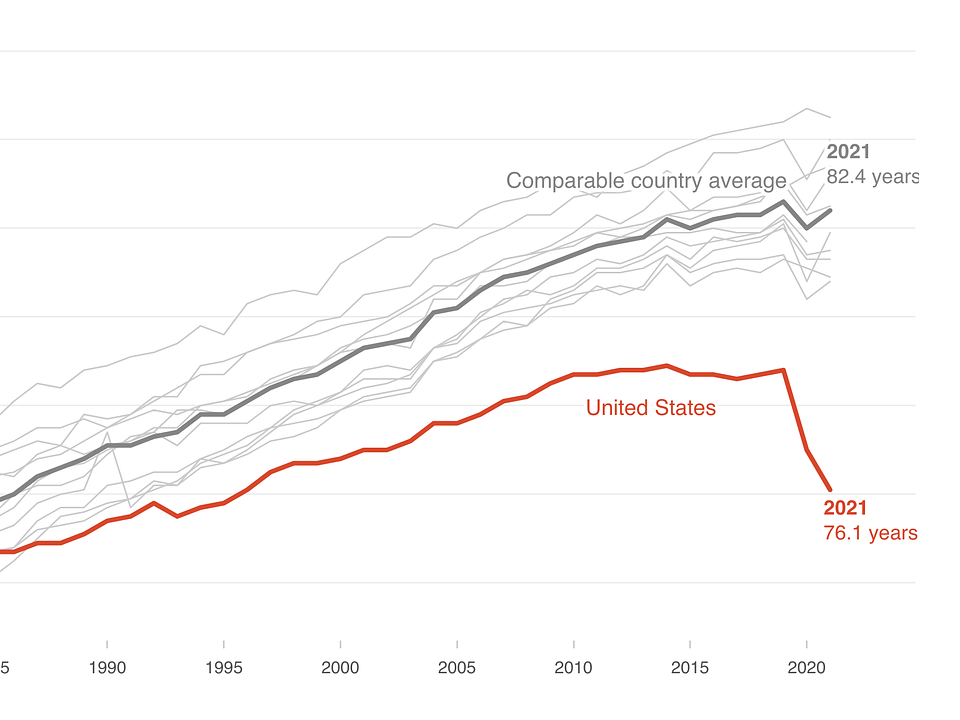
Unhealthy animals do not make healthy food. Aligning with nature (or not) impacts our long term health. It surely has much to do with the alarming health trends we are seeing in our nation. Below is a chart showing how our average life expectancy started to decrease for the first time in centuries.
It effects our pocket books too. In the mid-twentieth century we spent 17.5% of our disposable income on food and 5.2% on health care[4]. Today those numbers are essentially swapped. We spend 11.2% on food and 16.6% on health care[5].
The cultural lesson is simple. We can pay for our health, today, in the form of high-quality food. Or we can buy cheap industrial processed food and pay the bill through our declining health later.
By the way, this is exactly what externalized costs looks like. In this case the tab is picked up by our declining health. Not good.
Can we undo this disastrous trade-off we’ve unwittingly made? I believe we can. Find a local farm and start voting with your food-dollars. Or better yet, grow some food.
The chart below is the result of study conducted by Mother Earth News comparing a USDA standard egg to an egg from Joel Salatin’s Polyface Farm, a famous regenerative farm in Virginia, and a man I’ve learned a great deal about farming from.
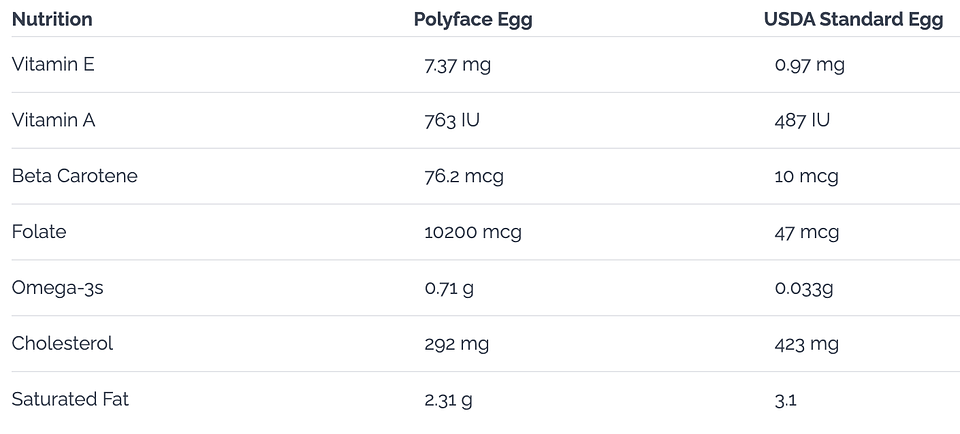
7x the Vitamin E.
Almost double the amount of Vitamin A.
21x the amount of Omega-3s - a form of fat that we are severely deficient in in the US
Less cholesterol
Less saturated fat
More than 200x the Folate!
The folate difference is especially interesting to me. When my wife was pregnant with our first child, she was strongly encouraged to take a prenatal. The primary reason given was because of how difficult folate is to find in our American diets. The medical recommendation is for a pregnant woman to consume at least 600 mcg of folate. This is because folate is critical for fetal brain development. And indeed this is a difficult amount to consume within our industrialized diets. You would need to consume an entire carton of USDA standard eggs a day to achieve this. By comparison, consuming just 1 Salatin-raised egg would supply more than 17x that 600mcg threshold.
Joel is not feeding his chickens some magic supplement feed formula to get these results. In fact he doesn’t even feed them organic feed. So what’s his secret? If you asked Joel I suspect he’d say something like he’s simply respecting the chickenness of the chicken. In other words, what context did God make the chicken for? Let’s respect that design.
Instead, we ripped God’s design apart in pursuit of economic efficiency - which in large part is gained simply by externalizing agricultural costs unto the fertility of our lands and the health of our bodies.
"The industrialization of agriculture has made it clear that the great, inclusive human sin is pride—the belief that we are powerful enough to stand outside Creation and judge it, to know what is good for it better than it knows itself." - Wendell Berry, The Unsettling of America
On Land-Community and Love
I believe this “ripping apart” affects our communities too.
Author, farmer and poet, Wendell Berry of Port Royal, Kentucky has made this case better than anyone. In his book, The Unsettling of America, Berry argues the “progress” of the last 50-100 years has degraded not only our land but the communities that once resided on them. He convincingly argues you can’t separate one from the other without consequences. The separation of land from the rural communities that truly care for that land can only ever cause death to both. The two are connected like one super-organism, just as our own lungs and hearts are connected.
Berry, being the poet-philospher he is, has put it much better than myself. The following are some of my favorite quotes of his:
"A viable neighborhood is a community: and a viable community is made up of neighbors who cherish and protect what they have in common.” - Wendell Berry
“I believe that the community - in the fullest sense: a place and all its creatures - is the smallest unit of health and that to speak of the health of an isolated individual is a contradiction in terms.” - Wendell Berry
“The primary motive for good care and good use of the land-community is always going to be affection, which is too often lacking.” - Wendell Berry
The arch-rival of Berry in his prime was Nixon Secretary of Agriculture Earl Butz (I told you we’d get to Earl). Earl was was forced to step down from his position for racist comments, and later in 1981, convicted of tax-fraud.
In the 1970s, Butz utilized every policy lever he had to bias our economics in favor of large industrial farms. His legacy was cemented in his famous aphorism: “get big or get out” which, come to think of it, sounds a lot like the prequel to “too big to fail”. Perhaps no human has had as much an impact on American agriculture as Earl Butz.
In 1977, the year The Unsettling of America was published, the two men met in my home state of Indiana to debate. Butz’s speech was riddled with impressive numbers demonstrating how less farmers increased the economic production of our farms, ultimately leading to greater material prosperity for our nation. To drive his point home he asked the audience how many people now had 2 or 3 TVs in their homes. Unsurprisingly, Berry’s rebuttal dove a little deeper than TV statistics:
“As I see it, the farmer standing in his field is not simply a component of a production machine. He stands where lots of cultural lines cross. The traditional farmer, that is the farmer who first fed himself off his farm and then fed other people, who farmed with his family, who passed the land on down to the people who knew it and had the best reasons to take care of it—that farmer stood at the convergence of traditional values, our values: independence, thrift, stewardship, private property, political liberties, family, marriage, parenthood, neighborhood—values that decline as that farmer is replaced by a technologist whose only standard is efficiency.”
At risk of being put on a hallmark card, I believe Berry’s argument is ultimately about love. Of love between man and the nature of which he has dominion. Of the place and community in which he resides. Love is not an economic commodity that is easily replaced. When you replace a multi-generational farmer, who has known and loved his place for generations, with a single-enterprise factory farm, the loss is difficult to state in numbers. The agricultural trends of the last century, accelerated in part thanks to Earl Butz, is a death to be grieved. But I have hope in the future.
We can and will start to put farming back together, and by extension, our own health and last but not least, the health of our communities.
Notes
https://eos.org/articles/agricultural-lands-are-losing-topsoil-heres-how-bad-it-could-get
https://eos.org/articles/agricultural-lands-are-losing-topsoil-heres-how-bad-it-could-get
https://worldanimalfoundation.org/advocate/factory-farming-statistics
https://www.cms.gov/data-research/statistics-trends-and-reports/national-health-expenditure-data/historical
https://www.ers.usda.gov/data-products/ag-and-food-statistics-charting-the-essentials/food-prices-and-spending & https://www.cms.gov/data-research/statistics-trends-and-reports/national-health-expenditure-data/historical